Unlocking Creative Potential with 12 Decor Panel Laser Cut SVG Designs
The intersection of digital design and physical fabrication has revolutionized how creators approach home decor, event styling, and architectural embellishment. At the heart of this transformation lies the versatility of vector graphics tailored for laser cutting machines. Among the most sought-after resources for makers today are comprehensive collections like the 12 Decor Panel Laser Cut SVG set. These digital assets serve as the blueprint for transforming flat sheets of material into intricate, three-dimensional works of art. Whether you are a professional interior designer, a small business owner selling handmade goods, or a hobbyist looking to personalize your living space, understanding the utility and application of these files is essential for maximizing your creative output.
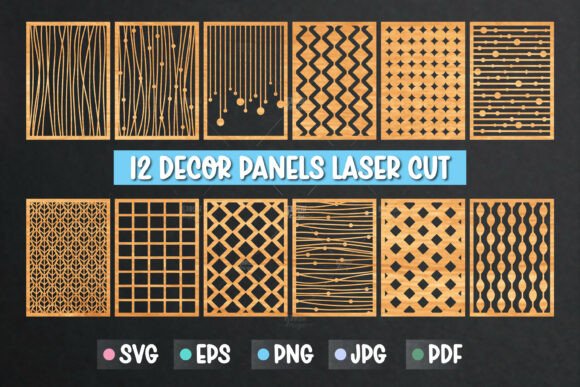
Laser cutting technology has moved far beyond industrial manufacturing floors. It is now a staple in workshops, schools, and home studios worldwide. The key to unlocking this technology's potential is high-quality source material. A collection offering twelve distinct panel designs provides a robust library that prevents repetitive aesthetics while maintaining a cohesive style. This variety allows users to experiment with different patterns, densities, and visual weights without needing to draft complex vectors from scratch. The efficiency gained by utilizing pre-made, optimized files cannot be overstated, as it shifts the focus from technical drafting to artistic execution and assembly.
The Strategic Advantage of Vector-Based Panel Collections
When selecting files for laser cutting, the format is just as critical as the design itself. The industry standard relies heavily on scalable vector graphics, specifically formats like SVG (Scalable Vector Graphics) and EPS (Encapsulated PostScript). These formats differ fundamentally from raster images like JPEGs or PNGs because they define shapes using mathematical paths rather than pixels. This distinction ensures that no matter how large or small you scale the 12 Decor Panel Laser Cut SVG files, the edges remain crisp, and the cut lines remain precise. There is no pixelation or loss of quality, which is vital when dealing with the fine tolerances required by laser cutters.
A curated set of twelve panels offers significant strategic advantages over purchasing single designs. Firstly, it provides thematic consistency. When creating a large installation, such as a room divider, a feature wall, or a series of matching lampshades, having a unified design language is crucial. A multi-pack ensures that while each panel may have a unique pattern variation, they all share similar line weights, corner radii, and stylistic flourishes. Secondly, it offers economic and time efficiency. Sourcing twelve individual files from different creators often leads to compatibility issues regarding layer organization, unit measurements, and cut settings. A bundled collection eliminates these variables, providing a standardized workflow that accelerates production time.
Material Versatility and Application Scenarios
The true power of these digital templates lies in their adaptability across various materials. While wood is the traditional choice for laser cutting, the 5x7 inch template size mentioned in many standard packs serves as a perfect prototype scale before committing to larger, more expensive materials. Once the design is validated, these SVG files can be scaled up indefinitely for use in plywood, MDF, acrylic, leather, fabric, and even thin metals depending on the machine's wattage.
- Architectural Screens and Room Dividers: By scaling the panels up and joining them, creators can build semi-transparent walls that filter light and provide privacy without blocking airflow. The intricate cutouts cast dynamic shadows that change throughout the day, adding a layer of kinetic energy to static spaces.
- Lighting Fixtures: Wrapping these panels around cylindrical or boxy frames creates stunning lampshades and pendant lights. The negative space created by the laser cuts allows light to escape in specific patterns, turning a simple bulb into a decorative focal point.
- Furniture Embellishment: These panels can be applied as veneers to cabinet doors, drawer fronts, or headboards. Adding a laser-cut overlay to plain furniture instantly elevates its perceived value and aesthetic complexity.
- Event Decor and Backdrops: For weddings, corporate events, or photo booths, lightweight materials like acrylic or foam board can be cut using these designs to create elegant backdrops. The reusability of digital files means the same design can be reproduced in different colors or materials to match varying event themes.
Educators and researchers also find value in these tools. In STEM curriculums, using pre-designed SVGs allows students to focus on the physics of laser cutting, material properties, and assembly techniques without getting bogged down in the steep learning curve of vector illustration software. It serves as an accessible entry point into digital fabrication, demonstrating how code and mathematics translate into tangible objects.
Workflow Optimization: From Download to Fabrication
Integrating digital downloads into a physical production workflow requires attention to detail. When you acquire a package containing EPS and SVG files, the immediate next step is file management and software compatibility. Most laser cutting software, such as LightBurn, RDWorks, or the proprietary software accompanying machines like Glowforge or xTool, accepts SVG natively. However, professional users often prefer EPS for its robustness in Adobe Illustrator or CorelDRAW, where final adjustments to node points or cut orders can be made.
The "Instant Download" model prevalent in the maker community supports rapid prototyping. Unlike waiting for physical shipping, digital acquisition allows a creator to identify a design need in the morning and have a finished prototype by the afternoon. This speed is invaluable for business owners who need to fulfill custom orders quickly or test market reactions to new product lines. Upon downloading the ZIP folder, the user typically finds files organized by size or format. The inclusion of a 5x7 inch version is particularly thoughtful; it acts as a "proof of concept." Cutting a small sample allows the operator to test kerf width (the amount of material burned away by the laser), power settings, and speed on a specific material batch before running a full-scale job that might waste expensive stock.
Furthermore, the layer organization within these SVG files often dictates the machine's behavior. Well-constructed files will separate cut lines from engrave lines or score lines onto different layers or assign them distinct colors. This preparation saves hours of manual setup time. For instance, a designer might want to cut the outer border of a panel while only scoring internal decorative lines to allow for bending. If the SVG is properly layered, this is a one-click operation in the laser software. If not, it requires tedious manual selection and assignment.
Considerations for Commercial Use and Scalability
For entrepreneurs and small business owners, the distinction between personal and commercial use licenses is paramount. Many creators purchase these 12 Decor Panel Laser Cut SVG bundles with the intent of selling the physical resulting products. Understanding the licensing terms ensures legal compliance and protects the business from intellectual property disputes. Generally, buying a digital file grants the right to sell the physical object produced from that file, but reselling the digital file itself is almost universally prohibited.
Scalability is another critical factor. While a 5x7 template is excellent for coasters, ornaments, or small gift tags, commercial applications often demand larger dimensions. Because SVG files are resolution-independent, scaling a design from 5 inches to 5 feet does not degrade the quality. However, practical considerations arise regarding material stability. As a panel grows larger, the structural integrity of the material becomes a concern, especially if the laser cut removes a significant percentage of the surface area. Professionals must calculate the remaining "web" of material to ensure the panel does not warp or break under its own weight or during installation. This is where having twelve variations helps; some patterns may be denser and more suitable for large spans, while others are better suited for smaller, delicate applications.
Moreover, the repeatability of digital files supports inventory management. A business can produce ten units of a specific lampshade today and another ten next month, knowing every single unit will be identical. This consistency builds brand reliability. In contrast, hand-carved or manually crafted items inevitably possess variations that, while charming, may not meet the strict specifications of certain commercial contracts or architectural bids.
The Role of Community and Continuous Learning
The ecosystem surrounding laser cutting is deeply collaborative. Platforms where creators share and sell files, such as those offering "Reddish with ❤" style branding, foster a community of continuous improvement. Users often leave feedback on how a specific SVG performed on certain materials, what power settings worked best, or how they modified the design for a unique application. This collective knowledge base elevates the entire field. A beginner might download a Decor Panel Laser Cut SVG and, through community forums, learn how to adjust the file to prevent flare-ups on acrylic or charring on oak.
Additionally, the availability of diverse file formats like EPS and SVG caters to different skill levels and software ecosystems. A user restricted to free software like Inkscape can utilize the SVG files effectively, while a professional using the Adobe Creative Cloud suite might leverage the EPS files for advanced manipulation. This inclusivity ensures that the barrier to entry remains low, encouraging a wider demographic to engage with digital fabrication. From educators teaching geometry through pattern making to artists exploring light and shadow, these tools democratize the creation of complex decorative elements.
In conclusion, the integration of specialized digital assets like the 12 Decor Panel Laser Cut SVG collection represents a significant leap forward for anyone involved in making. It bridges the gap between conceptual design and physical reality, offering a streamlined path to producing high-quality, aesthetically pleasing objects. By understanding the technical benefits of vector formats, the versatility of materials, and the strategic advantages of bundled designs, creators can optimize their workflows and expand their creative horizons. Whether the goal is to decorate a home, launch a product line, or educate the next generation of makers, these digital templates provide the foundational structure upon which innovation is built. The ease of access via instant download further cements their role as an indispensable resource in the modern maker's toolkit, proving that the future of decoration is not just about what you make, but how efficiently and creatively you can bring digital visions to life.