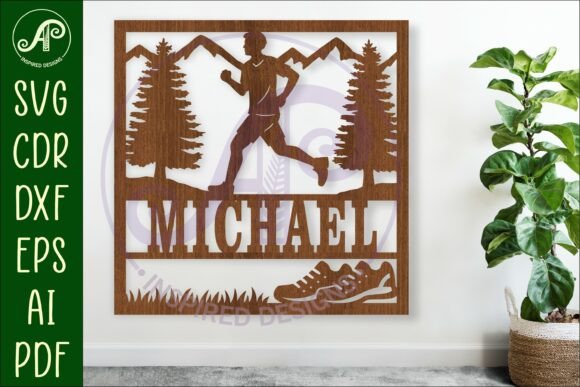
Evaluating the Male Running Themed Name Sign for Custom Decor Projects
In the realm of personalized home decor and small-scale manufacturing, the intersection of specific hobbies and custom typography presents a unique opportunity for creators. The Runner, Male Running Themed Named Sign serves as a prime example of a digital asset designed to bridge this gap. For professionals, hobbyists, and small business owners operating in the crafting space, understanding the utility and technical specifications of such files is essential before integrating them into a workflow. This evaluation examines the practical application, file versatility, and production considerations associated with this specific design resource.
Design Philosophy and Aesthetic Appeal
The core value of the Runner, Male Running Themed Named Sign lies in its targeted aesthetic. Unlike generic nameplates, this design incorporates a silhouette or graphic element depicting a male figure in motion, specifically running. This thematic choice immediately contextualizes the sign, making it suitable for gyms, home offices of fitness enthusiasts, children's bedrooms, or entryways of active households. The integration of a customizable name within or alongside this graphic requires a balanced approach to ensure legibility without compromising the artistic integrity of the running motif.
From a design perspective, the asset is created manually rather than generated by artificial intelligence. This distinction is significant for buyers who prioritize intentional composition over algorithmic randomness. Human-designed vectors typically offer cleaner anchor points, more logical layering for cutting processes, and a cohesive visual flow that AI tools sometimes struggle to replicate consistently. The result is a professional-looking template that maintains structural soundness when scaled or modified.
Technical Specifications and File Compatibility
For digital fabricators, the format of the source file is often more critical than the visual preview. This digital download provides a comprehensive suite of file types, ensuring compatibility across a wide range of hardware and software ecosystems. The inclusion of SVG (both outline and solid fill variants) makes the design immediately usable for popular craft cutters like Cricut and Silhouette, as well as web-based design platforms. The solid fill option is particularly useful for vinyl applications where a single-color cut is required, while the outline version offers flexibility for layered projects or intricate laser engraving paths.
Beyond SVG, the package includes AI (Adobe Illustrator), CDR (CorelDRAW), DXF, and PDF formats. This breadth of support accommodates professional vector editing suites and CAD programs used in industrial settings. The DXF format, for instance, is a standard requirement for many laser cutting machines and CNC routers that do not natively support SVG. By providing these multiple extensions, the creator eliminates the need for users to perform potentially error-prone file conversions, thereby preserving the geometric accuracy of the design.
The default sizing recommendation suggests cutting the design at 25cm (approximately 10 inches) wide. This dimension is optimized for use on 6mm MDF particle board, a common material in the signage industry due to its smooth surface and ease of painting. However, the vector nature of the files allows for infinite scalability. Users can resize the asset for smaller applications, such as keychains or ornaments, or enlarge it for substantial wall installations, provided their equipment supports the dimensions.
Workflow Integration and Production Considerations
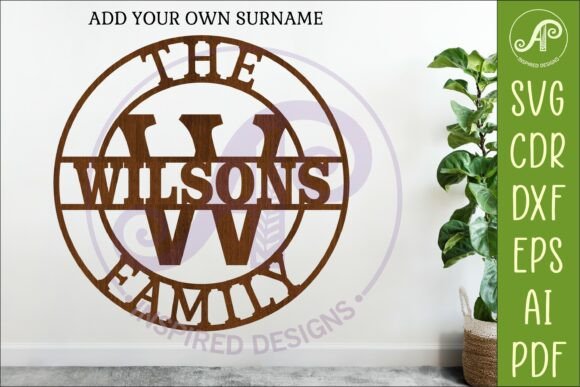
Implementing the Runner, Male Running Themed Named Sign into a production line requires attention to the customization process. A critical operational note is that the name must be linked to the design prior to sending the file to a laser machine or cutter. This step involves importing the vector file into design software, inserting the desired text, and welding or grouping the elements to create a unified path. For those unfamiliar with vector manipulation, the included PDF instructions and links to tutorial videos provide necessary guidance. These resources are vital for reducing the learning curve and minimizing material waste caused by setup errors.
When working with laser cutters, the distinction between outline and solid fill becomes operationally relevant. Solid fills may require raster engraving settings or specific cut strategies depending on the desired finish, whereas outlines are strictly vector cuts. Users working with 6mm MDF should verify their machine's power settings to ensure clean edges without excessive charring, especially around the detailed curves of the running figure. The design's robustness suggests it holds up well under typical laser parameters, but test cuts on scrap material remain a best practice.
Material Versatility and Application
While the design is optimized for 6mm MDF, its application is not limited to this substrate. The vector paths translate effectively to various materials, including:
- Acrylic: Ideal for modern, transparent signage where edge-lighting can highlight the running silhouette.
- Plywood: Offers a natural grain texture that contrasts well with painted names or stained backgrounds.
- Vinyl: Perfect for applying the design directly to walls, mirrors, or gym equipment without the need for physical mounting hardware.
- Metal: Suitable for plasma cutting or specialized laser systems, creating durable outdoor or industrial-style signs.
This flexibility allows creators to diversify their product offerings. A single digital purchase can yield products ranging from budget-friendly wooden door hangers to premium acrylic desk accessories, maximizing the return on investment for the asset.
Target Audience and Practical Value
The primary beneficiaries of this digital asset are individuals and businesses engaged in the maker economy. Small business owners selling personalized gifts on platforms like Etsy can utilize this design to fulfill orders rapidly once the initial setup is complete. Freelance designers can incorporate it into broader branding packages for fitness coaches or sports teams. Additionally, educators and community center coordinators might use the template for creating awards or room decorations for track and field clubs.
For the serious hobbyist, the value proposition extends beyond commercial potential. The ability to create a high-quality, personalized item for a family member or friend adds a sentimental dimension to the crafting process. The inclusion of customer support further enhances the user experience; knowing that assistance is available for linking names or troubleshooting issues reduces the friction often associated with complex digital downloads.
Limitations and Realistic Expectations
Despite its strengths, prospective users should maintain realistic expectations regarding the product's scope. As a digital download, it requires the user to possess or have access to the appropriate hardware (laser cutter, CNC, or vinyl cutter) and software skills to manipulate the text. It is not a finished physical product but a tool for creation. Furthermore, while the design is scalable, extreme resizing may necessitate adjustments to line weights or spacing to maintain structural integrity, particularly if cutting delicate materials like thin paper or fragile plastics.
The requirement to link the name before cutting implies a manual step in the workflow. For high-volume producers, this could become a bottleneck unless batch processing scripts or templates are established. However, for custom, one-off jobs, this manual intervention ensures quality control over each unique piece.
Final Assessment
The Runner, Male Running Themed Named Sign represents a well-structured digital resource for the modern creator. Its strength lies in the combination of a specific, appealing theme with robust technical delivery. The provision of multiple file formats, coupled with clear instructional support, addresses the common pain points of compatibility and usability. While it demands a certain level of technical proficiency to execute, the payoff is a versatile asset capable of producing professional-grade personalized decor. For those equipped with the necessary tools and seeking to expand their portfolio with fitness-oriented customizations, this design offers a reliable and effective foundation.