Integrating the Monogram Family Letter W Name Sign SVG into Your Custom Fabrication Workflow
In the realm of personalized fabrication and small-scale manufacturing, the transition from a digital concept to a physical asset relies heavily on the quality and compatibility of your source files. Whether you are a hobbyist refining your home workshop output or a small business owner scaling production for clients, the foundation of a successful project lies in the preparation phase. The Monogram Family Letter W Name Sign SVG represents more than just a decorative element; it is a critical component in a streamlined workflow designed for laser cutting, CNC routing, and vinyl plotting. By understanding how this specific digital asset fits into your broader operational process, you can significantly reduce material waste, minimize machine downtime, and ensure consistent quality across every unit produced.
Strategic File Selection and Pre-Production Planning
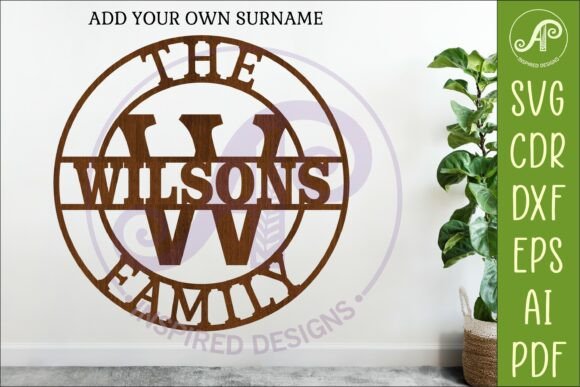
Before any material is loaded into a laser cutter or metal shear, the digital blueprint must be vetted for compatibility with your specific hardware and software ecosystem. This design package is engineered to bridge the gap between various design platforms and fabrication tools. It includes a comprehensive suite of file formats: SVG for web-based cutters and vector editors like Inkscape or Cricut Design Space, DXF for CAD-centric workflows, AI for Adobe Illustrator users, CDR for CorelDraw enthusiasts, and PDF for universal viewing and printing.
When integrating the Monogram Family Letter W Name Sign SVG into your pipeline, the first step is selecting the appropriate file type based on your current software environment. For instance, if your workflow relies on LightBurn for laser control, importing the DXF or SVG ensures that layer properties remain intact. If you are using a vinyl plotter for adhesive applications, the SVG format typically offers the cleanest path definition. This versatility eliminates the need for time-consuming file conversions, which often introduce node errors or scale discrepancies. By starting with a file native to your editor, you maintain the integrity of the vector paths, ensuring that the exterior cut lines—formatted in blue for immediate recognition in laser software—are interpreted correctly by the machine.
Optimizing Dimensions for Material Efficiency
One of the most practical aspects of this digital download is its scalability. While the recommended size for cutting on laser or metal equipment ranges from 20 to 50 cm, with a standard reference width of 25 cm (approximately 10 inches), the vector nature of the file allows for infinite resizing without loss of resolution. This flexibility is crucial for inventory management and custom order fulfillment. A professional operator might batch multiple 20 cm signs on a single sheet of plywood to maximize yield, while a bespoke commission might require a 50 cm statement piece for a large entryway.
To implement this effectively, establish a standard operating procedure for scaling. Always verify the dimensions within your design software before sending the job to the cutter. Most modern laser interfaces allow you to input exact measurements; ensuring the "W" monogram aligns with your material constraints prevents costly errors. For metal cutting, where kerf (the width of material removed by the cut) is a significant factor, slightly adjusting the internal spacing of connected letters may be necessary depending on the thickness of the stock. The clean, modern lines of this monogram design facilitate these adjustments, as the geometry is straightforward and lacks unnecessary complexity that could compromise structural integrity at smaller scales.
Execution: From Digital Import to Physical Cut
Once the file is imported and scaled, the focus shifts to machine setup and execution. The inclusion of exterior cut lines in blue is a deliberate workflow enhancement. In laser cutting software, color mapping often dictates power and speed settings. By assigning specific parameters to the blue layer, you can automate the cutting process, ensuring that the outer perimeter is cut with different settings than any internal details, if applicable. This separation of concerns simplifies the job setup, particularly when running batch jobs where consistency is paramount.
For those utilizing craft machines or vinyl plotters, the solid image format provides a ready-to-use asset that requires minimal manipulation. The process here involves loading the design, selecting the appropriate material setting (e.g., permanent vinyl, cardstock, or heat transfer), and executing the cut. The precision of the vector paths ensures that weeding—the process of removing excess material—is efficient, leaving behind crisp edges that define the professional look of the final product. Whether you are producing a single sign for a personal gift or fulfilling a bulk order for a real estate staging company, the reliability of the cut file directly impacts your throughput.
Leveraging Educational Resources for Complex Assemblies
Fabrication is not solely about cutting; it is also about assembly and finishing. Recognizing that connecting individual letters in a monogram can present challenges regarding balance and structural support, this package includes a PDF with step-by-step instructions and direct links to tutorial videos. These resources are vital for troubleshooting common issues, such as how to link the name seamlessly or how to reinforce thin connections in metal or wood.
In a professional context, these guides serve as training materials for new team members or as a reference for maintaining quality control standards. Watching a demonstration on how to link the name allows you to visualize the final assembly before committing to the cut, helping you anticipate potential weak points. This proactive approach reduces the likelihood of failed projects and ensures that the final installation meets client expectations. Integrating these learning assets into your pre-production checklist ensures that every team member understands the nuances of the design, leading to a more cohesive and efficient workflow.
Post-Processing and Long-Term Asset Management
The utility of the Monogram Family Letter W Name Sign SVG extends beyond the initial cut. Once the physical pieces are fabricated, the post-processing phase involves cleaning, painting, sealing, or mounting. Because the design is generated from high-quality vector data, the edges are smooth, reducing the amount of sanding or finishing required. This efficiency translates to labor savings, allowing you to allocate more time to value-added tasks like custom painting or packaging.
From an organizational standpoint, managing your digital library is essential for long-term success. Since this is a digital download only, there is no physical inventory to store, but the digital files must be backed up and categorized effectively. Store the zip folder in a cloud-synced directory with clear naming conventions (e.g., "Monogram_W_Family_Sign_Master_v1"). This ensures that if a client requests a reorder six months later, you can instantly retrieve the original files without searching through disparate downloads. The ability to instantly access the SVG, DXF, AI, PDF, and CDR files means you are always prepared to adapt to a client's changing hardware requirements or to pivot to a new fabrication method if your primary machine goes offline.
Scaling Your Creative Business with Reliable Assets
For entrepreneurs and freelancers, the consistency of your product is your brand. Using a standardized, high-quality template like this monogram sign allows you to offer customization without reinventing the wheel for every order. You can confidently market personalized family name signs knowing that the underlying geometry is sound and tested. This reliability builds trust with your customers and streamlines your quoting process, as you have accurate data on material usage and cutting times.
Furthermore, the adaptability of the design supports diverse revenue streams. The same file can be used to create wooden wall art, metal garden stakes, acrylic desk ornaments, or vinyl decals for vehicles. By mastering the workflow associated with this single asset, you unlock the potential to serve multiple market segments without acquiring new designs. This strategic use of versatile digital assets is a hallmark of efficient creative businesses, allowing for rapid prototyping and agile responses to market trends.
In conclusion, the Monogram Family Letter W Name Sign SVG is a robust tool that, when integrated thoughtfully into your fabrication workflow, enhances productivity and product quality. From the initial file selection and scaling to the final assembly and archival, every step benefits from the precision and flexibility of this digital package. By adhering to best practices in file management, machine setup, and continuous learning through the provided instructional resources, you can ensure that your production process remains smooth, scalable, and profitable. Whether you are crafting a one-off heirloom or building a catalog of custom signage, this asset provides the technical foundation needed to execute your vision with professionalism and ease.